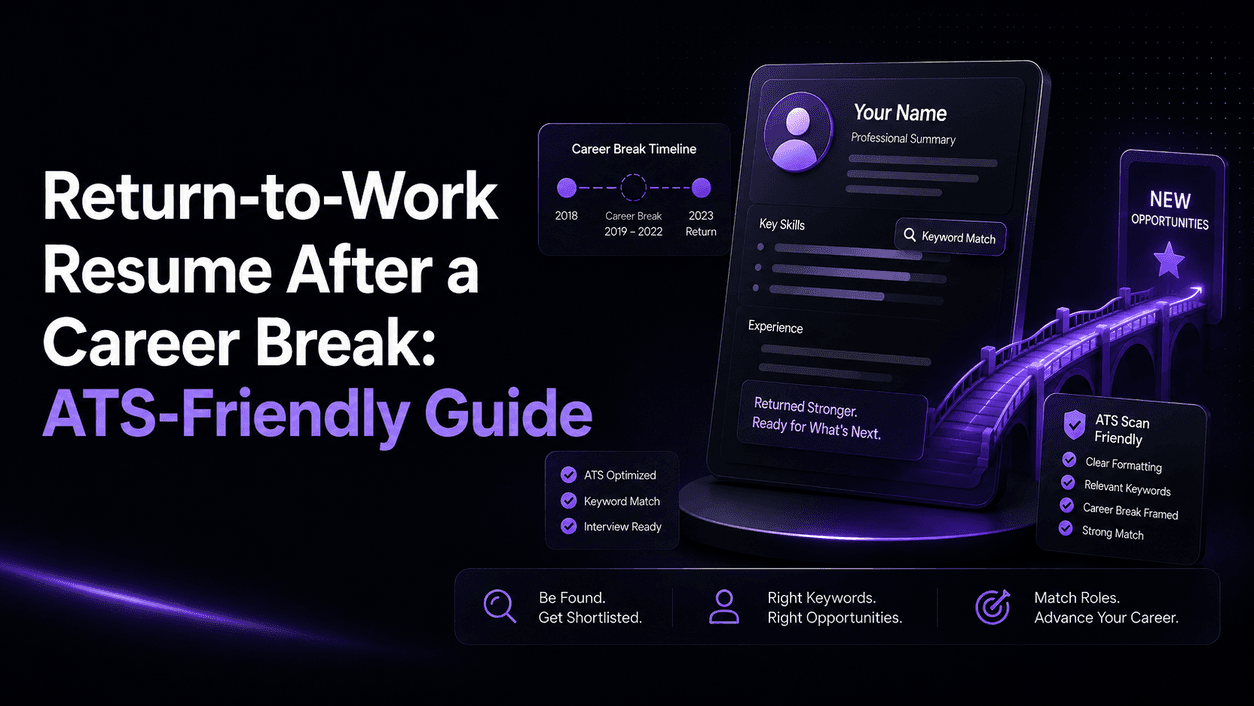
Employment gaps happen. Whether you took time off for family, health, travel, education, or an extended job search—you're not alone. Studies show over 60% of workers have experienced a career gap at some point.
The challenge? Explaining gaps without raising red flags or lying on your resume.
Why Employers Care About Gaps
Let's understand the concern from their perspective:
- Skills decay — Have your abilities stayed current?
- Commitment — Will you leave again unexpectedly?
- Red flags — Were you fired and couldn't find work?
Your job is to address these concerns proactively without being defensive.
Resume Formats That Minimize Gaps
Use Years Instead of Months
If your gap is less than a year, using only years can make it invisible:
❌ January 2024 - August 2024 → Shows 8-month gap clearly
✅ 2023 - 2024 → Gap is less obvious
This isn't lying—it's standard formatting. Many successful professionals use year-only dates.
Functional Resume Format
For longer gaps, a functional (skills-based) resume puts your abilities front and center:
- Lead with a strong summary
- Group achievements by skill category
- Place work history at the bottom
This format shifts focus from when you worked to what you can do.
How to Address Common Gap Reasons
Parental Leave / Caregiving
Be straightforward—this is increasingly normalized:
Career Break (2023-2024) Full-time caregiver for family member. Maintained professional development through online certifications in [relevant skill].
Health Issues
You don't owe details about health. Keep it simple:
Career Sabbatical (2023-2024) Personal leave of absence. Now fully ready to return to professional work.
Laid Off / Extended Job Search
Focus on what you did during the gap:
Professional Development (2023-2024) Completed AWS certification while conducting strategic job search. Contributed to open-source projects and attended industry conferences.
Travel / Personal Growth
Frame it as intentional development:
Sabbatical (2023-2024) Planned career break for international travel, developing cross-cultural communication skills and language abilities. Completed remote freelance projects during this period.
Entrepreneurship / Failed Business
This shows initiative:
Founder / Consultant (2022-2024) Launched [business type]. Developed skills in marketing, operations, and client management. Transitioned back to full-time employment seeking [reason].
What to Do During a Current Gap
If you're currently unemployed, fill the gap with:
Freelance or Contract Work
Even small projects count:
- Fiverr or Upwork gigs
- Consulting for former colleagues
- Pro bono work for nonprofits
Volunteer Work
Volunteer positions show you're staying active:
- Industry-related nonprofits
- Professional associations
- Community organizations
Education and Certifications
Online learning fills gaps productively:
- Coursera, LinkedIn Learning, Udemy courses
- Industry certifications
- Bootcamps or workshops
Personal Projects
Relevant side projects demonstrate skills:
- GitHub repositories (for tech roles)
- Blog or content creation
- Portfolio projects
ATS Considerations for Gaps
ATS systems typically don't penalize gaps directly, but they might affect you if:
- Keywords are missing from gap periods
- Date formats are inconsistent
- Required experience calculations are affected
How to Handle This
Include your gap activities in a way ATS can parse:
Professional Development | 2023-2024
- Completed Google Data Analytics Certificate
- Contributed to 3 open-source projects
- Attended 5 industry conferences
This gives ATS something to index while explaining your gap.
What NOT to Do
Don't Lie
Fabricating jobs or dates is risky:
- Background checks catch lies
- References won't verify
- It can get you fired later
Don't Over-Explain
You don't need paragraphs of justification. Brief, confident explanations work best.
Don't Be Defensive
Framing gaps negatively ("Unfortunately, I had to take time off...") makes them seem worse. State facts neutrally.
Don't Leave It Unaddressed
Complete silence about gaps lets imaginations run wild. Brief acknowledgment is better than nothing.
The Cover Letter Advantage
Your resume has limited space for context. Use your cover letter to:
- Briefly acknowledge the gap (one sentence)
- Explain what you did/learned
- Pivot to why you're excited about this role
Example:
"After taking a planned sabbatical in 2024 to care for a family member, I'm energized to return to product management. During this time, I maintained my skills through online certifications and am eager to bring fresh perspective to [Company]'s mission."
Interview Preparation
If you get the interview, be ready to discuss your gap:
- Keep it brief — 2-3 sentences max
- Stay positive — Focus on growth, not hardship
- Bridge forward — Connect to why you're ready now
- Don't over-share — Personal details aren't required
Script:
"I took time away from full-time work to [brief reason]. During that period, I [productive activity]. I'm now fully ready to commit to a new role, and I'm particularly excited about this position because [reason]."
Key Takeaways
- Use year-only dates for gaps under 12 months
- Fill gaps with freelance, volunteer, or education activities
- Address gaps briefly and confidently—don't over-explain
- Never lie about employment history
- Use cover letters to provide context
- Prepare a brief, positive interview response
Employment gaps don't have to derail your job search. With the right strategy, you can address them honestly while keeping the focus on what really matters—your ability to do the job.